
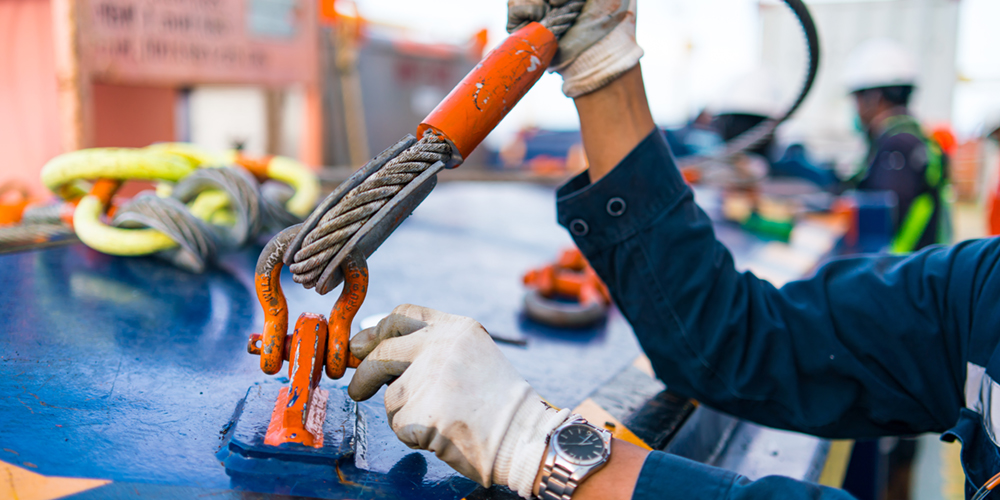
Safety audits are a standard part of industrial operations in Western Australia. In sectors like mining, construction, and marine engineering, the integrity of your lifting equipment determines your site’s safety and legal standing. Navigating an audit requires more than just functional gear. It requires strict adherence to Australian Standards and meticulous record-keeping.
West Coast Lifting provides professional inspection services in Henderson, WA. We help businesses transition from reactive maintenance to proactive compliance. Use the following ten points to prepare your site for its next safety audit.
1. Adhere to Australian Standards (AS)
Compliance starts with understanding the relevant Australian Standards. Different types of equipment fall under different codes. For example, AS 2550.1 governs the safe use of cranes, hoists, and winches. AS 3775 covers chain slings for lifting purposes.
Australian Standards are not mere suggestions. They are the benchmark for safety. Auditors check if your equipment meets these specific manufacturing and testing requirements. Familiarise your team with these standards to ensure every piece of hardware on-site is compliant. Visit West Coast Lifting to source equipment that meets these rigorous national criteria.
2. Implement the Three-Tiered Inspection Approach
Safety audits do not just look at your annual certificates. They look for a culture of consistent inspection. Implement a three-tiered approach to ensure no defect goes unnoticed.
• Daily Checks: Performed by the operator before every shift. These are visual assessments of the equipment’s condition.
• Monthly Inspections: More detailed visual checks documented in a logbook.
• Annual Thorough Examinations: Conducted by a certified third party. This is a deep-dive inspection involving measurements and potential non-destructive testing (NDT).
Standardise these tiers across your Henderson worksite. Consistent frequency prevents the deterioration of components from becoming a safety hazard.
3. Verify the “Competent Person” Status
A “Competent Person” must perform your thorough examinations. Australian regulations define a competent person as someone who has acquired through training, qualification, or experience the knowledge and skills to inspect lifting equipment.
During an audit, you may need to prove the competence of your inspectors. Third-party providers like West Coast Lifting ensure your inspections are carried out by qualified professionals. This removes the conflict of interest often found in internal inspections. Ensure your inspector provides a detailed report that signs off on the equipment’s fitness for service.
4. Conduct Mandatory Daily Pre-Operation Checks
Daily checks are the first line of defence against equipment failure. Operators must inspect the bridge, hoist, trolley, and runways for any visible signs of wear. Check all controls to ensure they function properly and return to neutral when released.
Instruct operators to look for loose bolts, broken parts, or unusual noises during startup. Verify that the safety latch on every load hook is functional and secure. If any defect is found, tag the equipment “Out of Service” immediately. These daily logs provide an essential paper trail for auditors, proving that safety is a daily priority rather than an annual event.
5. Maintain a Comprehensive Lifting Equipment Register
A Lifting Equipment Register is a central document that lists every piece of rigging and lifting gear on your site. This is often the first document an auditor asks to see. A functional register must include:
• Equipment description and serial number.
• Working Load Limit (WLL).
• Date of the last inspection.
• Date of the next scheduled inspection.
• The current status (Pass/Fail/Quarantined).
Organise your register logically. Use digital tools to ensure it is always up to date and easily accessible. A well-maintained register demonstrates total control over your assets.
6. Monitor Wire Rope and Synthetic Sling Health
Wire ropes and synthetic slings are high-wear items. They are common points of failure during an audit. When inspecting wire ropes, look for “bird-caging,” kinks, or broken wires. Even minor rust can indicate internal degradation. For synthetic slings, check for “fuzzy” textures, cuts, or heat damage. Ensure the tags are legible. If a WLL tag is missing or unreadable, the sling is non-compliant and must be removed from service. Visit the Working Load Limit chart to verify the capacities of your gear against your specific lifting requirements.
7. Understand Proof Testing and Load Limits
Proof testing involves applying a load to the equipment that exceeds its rated Working Load Limit. This confirms the structural integrity of the item. General standards often require testing to 125% of the rated load, though specific Australian Standards may dictate different percentages for certain hardware.
Never exceed the rated capacity during regular operations. Auditors look for evidence of overloading, such as stretched chain links or widened hook throats. Proof testing should be performed after major repairs or as part of the initial certification before first use. Keep all proof test certificates filed alongside your equipment register.
8. Use Digital Asset Tracking for Accuracy
Manual logbooks are prone to errors and physical damage. Digital asset tracking simplifies the audit process. By using RFID tags or QR codes, inspectors can scan a piece of equipment in Henderson and instantly view its entire service history on a tablet or smartphone.
Digital systems provide automated reminders for upcoming inspections. This ensures you never miss a compliance deadline. Digital tracking also creates a permanent, unalterable record of all maintenance and inspections. This level of transparency is highly valued by safety auditors.
9. Inspect Rigging Hardware and Hooks
Rigging hardware, including shackles, turnbuckles, and hooks, requires the same level of scrutiny as the hoists themselves.
• Hooks: Check for any twisting or opening of the throat. If the throat opening has increased by more than 5% (or as specified by the manufacturer), the hook is unsafe.
• Shackles: Ensure pins are not bent and threads are in good condition. Only use shackles with legible WLL markings.
• Load Blocks: Inspect for cracks in the frame and ensure sheaves rotate freely without excessive play.
Ensure all hardware is correctly sized for the job. Misaligned or mismatched hardware is a major red flag for auditors.
10. Act on Inspection Findings Immediately
An inspection is only useful if you act on the results. If an inspector identifies a defect, the equipment must be quarantined immediately. Do not leave faulty gear on the shop floor where it might be used by mistake.
Document the corrective actions taken. If an item is repaired, it must be re-inspected and potentially re-tested before returning to service. If it is scrapped, record the date of disposal. Closing the loop on maintenance tasks shows auditors that your safety system is functional and responsive.
Professional Support in Henderson
Passing a safety audit requires diligence and technical expertise. West Coast Lifting supports businesses in Henderson and throughout Western Australia with expert lifting and rigging services. We provide the inspections, equipment sales, and hire options necessary to keep your operations compliant and safe.
Do not wait for an audit to discover a failure in your safety system. Be proactive. Establish a rigorous inspection schedule and maintain your documentation with precision. To discuss your inspection requirements or to book a certified examiner, contact West Coast Lifting today.